
**Get authentic reviews today →, backed by a 15-day replacement warranty for flagged or removed reviews, built for a yelp and multi-platform review service.
Most restaurants build more trust and resilience with a yelp and multi-platform review service approach, while a Yelp-only plan can still win in pockets where Yelp dominates. This guide compares Yelp-only vs multi-platform review approaches with data and field results in 2026 so you can choose what fits your market and budget.
Yelp is still strong for diners who start on Yelp. However, Google now captures more local-intent searches across Maps and Search, and TripAdvisor or Facebook can sway tourists and regulars. Therefore, your long-term plan should weigh reach, authenticity, geo relevance, and risk.
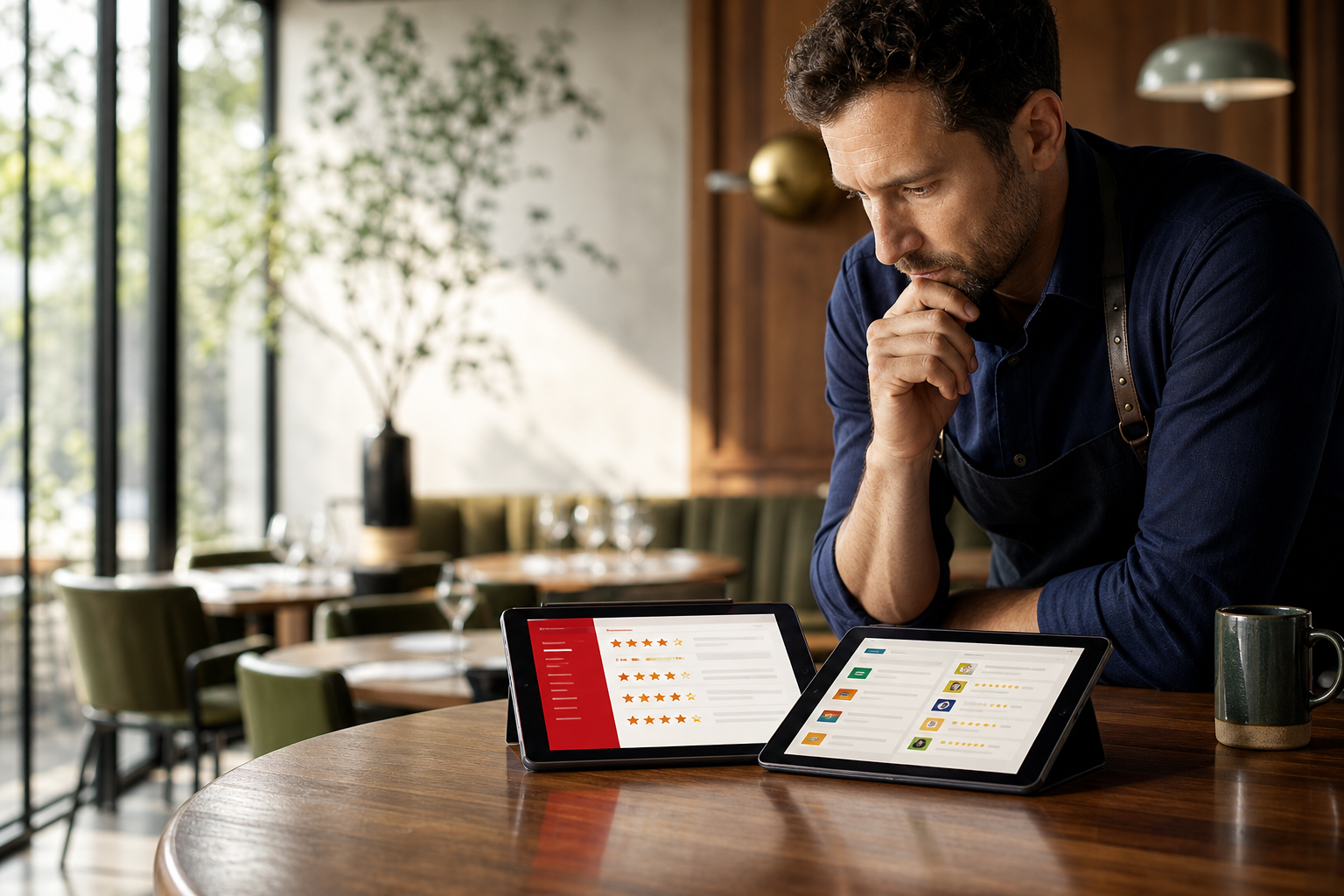
What Restaurants Actually Need from a Review Service
You need reviews that are real, spread across the sites your guests use, and placed where they help you rank and convert. You also need geo-accurate feedback that mirrors your true guest mix, plus a plan that can last for years without platform whiplash. In short, your decision is about more than stars.
According to InstantBizReviews, 79% of people trust online reviews as much as word-of-mouth referrals (Source: InstantBizReviews, 2026). As a result, small shifts in your average rating and volume can change how often new diners choose you. Moreover, restaurants depend on local search more than most local trades because intent is high and choice is fast.
Google, Yelp, TripAdvisor, and Facebook each reach different diner segments. For example, Google excels for “near me” and brand-name searches. Yelp is strong for cuisine filters and price cues. TripAdvisor over-indexes with travelers, while Facebook can sway local regulars with photos and events. Therefore, coverage across platforms widens your funnel.
In addition, authenticity and location signals matter. Reviews that sound real, come from real accounts, and match your neighborhood help both trust and local visibility. Finally, you need a service that will not break if one platform tightens filters or changes rules. The debate is really about spread vs. single-platform focus.
The review criteria that matter
- Review authenticity and credibility (real accounts, natural language, varied profiles)
- Platform coverage and audience reach (Google, Yelp, TripAdvisor, Facebook)
- Local SEO impact (visibility in Maps/Local Pack and higher CTR with stars)
- Geo-targeting accuracy (reviews tied to your city and service area)
- Long-term sustainability (less risk if one site changes filters)
- Operational lift (request workflows, monitoring, and response support)
For a deeper look at how Google reviews influence service businesses, see this practical primer: Google review service for home services. The industry differs, but the local signals carry over.
Yelp-Only Review Strategy: Strengths and Weaknesses
Yelp is a powerhouse for dining-specific searches and category browsing. Cuisine filters, price tiers, and photo-led decisions suit restaurants well. In addition, Yelp’s brand still means “food discovery” for a large group of diners. If your city has a high Yelp user base, a deep Yelp profile can send you steady covers.
However, a Yelp-only plan places all of your reputation risk in one place. Yelp’s recommendation filter is known for being aggressive. As a result, some legitimate reviews may not show, and review counts can swing. Moreover, audiences who start on Google, TripAdvisor, or Facebook may never see your Yelp stars.
Costs can climb if you rely on Yelp ads for steady reach. You may need featured placement to defend keywords in busy zip codes or near popular blocks. On the other hand, ad spend on a single platform can crowd out budget that might build presence on Google Maps or TripAdvisor, where new diners also decide fast.
This comparison also comes down to control. With a single-platform focus, one policy shift can set you back. Therefore, even Yelp-strong restaurants should ask what happens if filters change or ad prices rise in the busy season.
Yelp-only snapshot
- Where it excels: cuisine filters, photo-led browsing, high-intent food seekers
- Real risk: aggressive filtering can hide some real reviews
- Budget watch-out: ad costs can stack up in dense, foodie-heavy areas
- Oversight: diners who start on Google Maps or TripAdvisor may never see you
For background on the platform’s history and user base, see the Yelp entry on Wikipedia.
Multi-Platform Review Strategy: Strengths and Weaknesses
A multi-platform approach spreads your presence across Google, Yelp, TripAdvisor, and Facebook. As a result, you show up where diners actually search, not just where you advertise. Furthermore, it reduces single-platform risk and builds durable trust across the customer journey, from the first map tap to social proof on event pages.
Google Business Profile reviews can show rich results and star ratings, which can improve visibility and clicks. Specifically, Google’s review snippets are documented here: Review snippets. Google Search Central. While no single factor guarantees rankings, reviews support prominence and help searchers choose you.
InstantBizReviews supports this route with authentic reviews from real accounts, verified IP addresses for security, SEO-optimized content, and geo-targeted placement. In addition, demography-based reviews help you reach the right local audience segments, such as commuters for weekday lunch or families for weekend brunch. Therefore, the multi-platform plan aligns with how diners actually decide.
The downside is complexity. You must manage profiles, requests, replies, and reporting across four sites. However, a service can absorb that load. The trade-off, then, is fewer baskets with more eggs versus more baskets with steady flow.
"Excellent service! The reviews are real, and our sales have skyrocketed thanks to the SEO-optimized feedback." — Manager, Cruz Wellness
In addition, InstantBizReviews backs placements with a 15-day replacement warranty for flagged or removed reviews. That risk reversal helps protect your investment while platforms evolve.
Also Read!
How to Manage Online Reputation for Your Medical Practice
Best Reputation Management Service for Medical Practices in 2026
Yelp-Only vs Multi-Platform: Side-by-Side Comparison for Restaurants
Both paths can win in 2026. The choice hinges on your market, traveler mix, and budget. Therefore, we stacked them against six practical dimensions and called a clear winner in each. We also note what might tilt the call in a different direction.
First, local SEO impact favors multi-platform because Google visibility plus Yelp depth beats Yelp alone. Second, review authenticity depends on your provider and process. InstantBizReviews emphasizes real accounts with verified IP addresses for security and SEO-aware language, which supports credibility across sites. Third, platform risk is lower when you are not tied to one filter or feed.
Fourth, cost efficiency depends on where your next diner starts. If most searches start on Google Maps, building Google reviews can cut paid clicks. Fifth, diner trust grows when they see the same story in more than one place. Finally, geographic targeting is easier to tune when you can aim reviews to match your city, neighborhood, or tourist zones.
Category winners at a glance
| Dimension | Yelp-Only Strategy | Multi-Platform Strategy | Winner |
|---|---|---|---|
| Local SEO impact | Strong on Yelp | Strong on Google + others | Multi-Platform |
| Review authenticity | Varies by process | Real accounts, verified IPs via InstantBizReviews | Multi-Platform |
| Platform risk | High (single point) | Lower (diversified) | Multi-Platform |
| Cost efficiency | Can get pricey | Flexible by volume and platform | Multi-Platform |
| Diner trust | High with Yelp users | Higher across segments | Multi-Platform |
| Geo targeting | City-level focus | Fine-grained, neighborhood-aware | Multi-Platform |
Head-to-head, a broader footprint for long-term trust tends to win.
**Start geo-targeted reviews now →
Cost Comparison: Yelp Ads and Services vs Multi-Platform Review Services
Cost is strategy in disguise. Yelp encourages profile upgrades and ads for steady reach, while a multi-platform service spreads review volume across sites that map to your audience. The dollars you spend should match where the next 100 diners will find you.
Industry estimates in 2026 put Yelp profile enhancements at around $90 per month and ad budgets in the $150–$600+ per month range in busy categories (Source: InstantBizReviews market analysis, 2026). Those figures climb in dense zip codes with heavy dinner traffic. On the other hand, multi-platform services like InstantBizReviews price packages by review volume and platform mix, so you can target where you need lift most.
ROI depends on concept and stage. Fine dining may see the biggest payoff from Google + Yelp depth, because guests research longer. Fast-casual can win with steady Google Maps growth and a solid Yelp base. Takeout-heavy brands may prioritize Google for “near me” plus Facebook for local reach. Therefore, pick the mix that maps to how your guests decide.
- Early stage (months 1–6): build Google visibility and a base on Yelp; add TripAdvisor if you have tourist flow.
- Growth stage (months 6–18): scale multi-platform volume; defend priority cuisine keywords; refine geo targets.
- Mature stage (18+ months): maintain cadence; shift budget from ads to organic review growth where possible.
For collection tactics that translate well to service brands, this guide offers practical ideas: Google review service for home services. The workflows apply to hospitality with light tweaks.
Verdict: Which Review Strategy Should Your Restaurant Choose?
For most restaurants, multi-platform is the safer long-term bet. It reaches more diners, supports Google visibility, and reduces platform risk. Yelp-only can still work in cities where Yelp dominates dining searches, or for niche concepts with strong Yelp category traction. However, the broader plan builds trust in more places, which converts more first-time guests.
InstantBizReviews helped Thompson’s Café boost local search rankings with authentic reviews spread across platforms, not just on one site. As a result, their stars told a consistent story wherever guests looked. Moreover, geo-targeted reviews matched the hyperlocal nature of restaurant marketing, from lunch-hour corridors to weekend brunch blocks.
If you want Yelp depth without single-platform risk, choose a partner that can place reviews on Yelp, Google, TripAdvisor, and Facebook while keeping authenticity first. InstantBizReviews focuses on real accounts with verified IP addresses for security, SEO-aware language, and a 15-day replacement warranty, which together protect your spend and your brand voice. In 2026, the decision is really a question of reach, resilience, and real-world diner behavior.
- Choose Multi-Platform if you need broad reach, Google visibility, and lower platform risk.
- Choose Yelp-Only if your city is Yelp-heavy and you can defend placement with budget.
- Consider a Hybrid ramp if you rely on tourists or events and need TripAdvisor and Facebook signals.


