

79% of people trust online reviews as much as word-of-mouth referrals (Source: InstantBizReviews). An online reputation management service helps you turn that trust into full tables by tightening how you ask for, reply to, and use reviews. Here’s the short answer: better ratings and fresh, real reviews push you higher on maps and “near me” searches, which lifts foot traffic and reservations. Weak or stale ratings do the opposite and leak sales to the spot next door.
You don’t need a new full-time job to fix this in 2026. You need a simple weekly routine, a clear script for staff, and a fair, fast way to reply to praise and complaints. I’ve run busy floors and felt the heat when three servers call out and the line is to the door. So the plan below is built for real life: short steps, quick wins, and habits that stick.
We’ll cover why reviews sway walk-ins and bookings, a six-step system to run each week, mistakes that drain trust, and tools that can help. You’ll see how to set targets, coach the team in minutes, and use happy guest quotes in your menus, socials, and emails, without gimmicks.
Why Online Reviews Make or Break a Restaurant
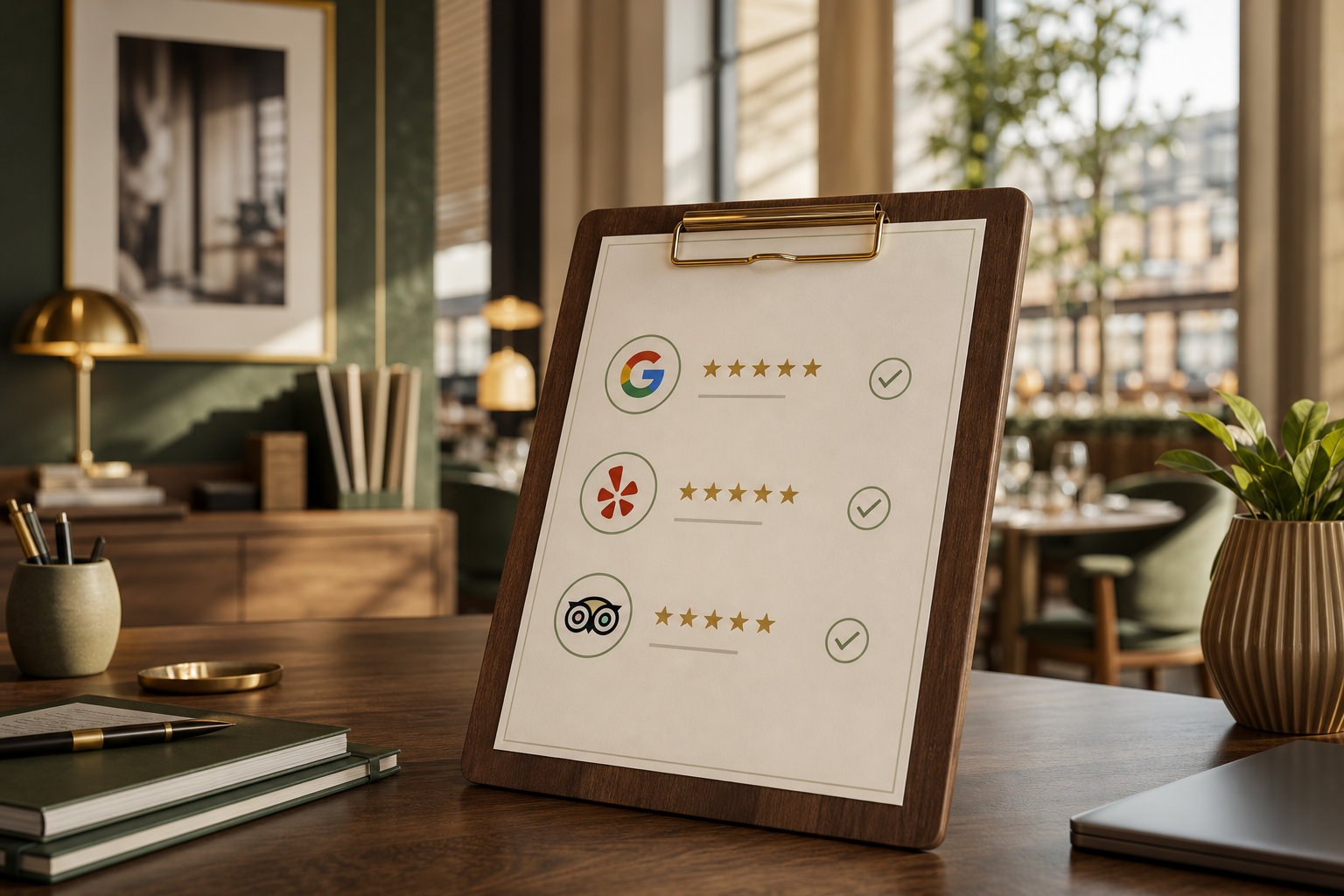
Reviews are the new curb appeal. Guests check Google, Yelp, and TripAdvisor before they ever glance at your menu. Strong ratings build trust before they see your host stand. Weak ratings plant doubt they can’t unsee.
Here’s how that shapes revenue. First, search rank. Fresh, high-quality reviews feed your local visibility, which raises your odds of landing in the map pack. That top three spot gets a lion’s share of taps.
Second, conversion. Great recent reviews shrink the gap between “maybe” and “book.” Guests stop price shopping the second they feel safe. Third, word of mouth at scale. A single 5‑star with a photo can reach hundreds of locals in your area who search for your cuisine.
As a result, reviews drive three cash levers: walk-ins, reservations, and repeat visits. You’re not chasing stars for ego. You’re making it easy for hungry locals to choose you now, not next month. And you’re proving you’ll make things right when a meal misses the mark.
How Reviews Drive Seats Filled
- Visibility: More high-quality, fresh reviews = stronger map and local results.
- Proof: Real guest photos and details beat ad claims every time.
- Conversion: Clear, recent praise turns “let’s think” into “let’s book tonight.
“We’re seeing an uptick in sales.” — Director, Carter's Boutique
Moreover, the flywheel is real. Faster replies attract more reviews, which improve rank and trust, which gain more first-time guests, which gives you more chances to delight and earn new reviews. If you need help turning that wheel, an online reputation management service can reduce the grunt work while you stay focused on service.
A Step-by-Step Framework for Managing Your Restaurant's Reputation
You don’t need fancy dashboards to get results. You need a weekly rhythm and a few scripts your team can use in under 10 seconds. If you prefer to outsource parts of it, an online reputation management service can plug into this framework without changing the core.
The 6-Step System
-
Audit current listings
Start with Google Business Profile, Yelp, and TripAdvisor. Confirm your name, address, phone, hours, and menu URLs. Note your star rating, review count, and the last 10 reviews for each. Record repeat themes, service speed, value, noise, or parking. -
Claim all profiles
Claim ownership on every platform and add high-quality photos of your dining room, key dishes, and staff at work. Add categories, menus, and a short, clear description. If you run structured data on your site, align it with your listings. For reference, see Local business structured data. If you’re pressed for time, an online reputation management service can claim and verify pages faster. -
Build a review request system
Ask for feedback at peak joy: when the plate is cleared, at the host stand, and in the follow-up text. Keep it short. “Thanks for dining with us, would you share a quick review?” Use QR codes on the receipt and a short link in your SMS. Aim for geo-targeted reviews that reflect your true local base. -
Respond to every review
Thank fans by name and mention one detail they shared. For a complaint, reply within 24 hours, say what you fixed, and offer to move to DM or phone to solve it. Never copy-paste. Two lines, human tone, and action beats a long speech. -
Monitor mentions weekly
Pick one 20‑minute block each week. Scan new reviews and social tags. Track wins and issues in a shared note: “food temp,” “host wait,” “vegan options.” Tag leaders and log fixes. Patterns guide training and specials. -
Use happy reviews in your marketing
Pull two fresh quotes each week for your social posts, email footer, and booking page. Ask guests for photo consent if needed and credit first names only. SEO-optimized reviews with location cues (“pre-theater dinner on 5th Ave”) can also help searchers who match that intent.

Helpful Scripts Your Team Can Use
- At the table: “Glad you loved the brisket. A quick review helps our small team a lot—QR is on your receipt.
- Host stand: “If we earned five stars today, would you mind sharing one? It keeps us climbing in local search.
- Reply to 5-star: “Thank you, Maya! We shared your note with Julio on the line—he’ll be thrilled.
- Reply to 2-star: “Sorry for the wait, Dan. We added a second host on weekends and adjusted pacing. I’m Alex—DM me so I can make this right.
For deeper tactics, reply templates, how to ask without pressure, and what to say if guests ask about platforms, see this helpful SMB guide to reviews. It’s built for tight teams like yours.
Also Read!
Small Business Guide to Choosing the Best Google Review Service
5 Reputation Management Mistakes Restaurant Owners Make
Even good operators slip here. The fix is simple once you see the pattern. I’ve made every one of these in a busy week and paid for it in slow Tuesdays.
-
Ignoring negative reviews
Silence looks like agreement. A fast, sincere reply shows you care and keeps a one-off miss from becoming your story. Aim for a 24-hour window, even on weekends. -
Buying obviously fake reviews
Guests can smell it. So can platforms. It risks removals and a hit to trust. Focus on real, geo‑true feedback from people who actually ate your food. If you use any outside help, keep it authentic and above board. -
Only responding to complaints
Fans need love too. Thanking them builds a bank of goodwill and prompts return visits. It also teaches silent fans the kind of review that helps you most. -
Neglecting non-Google platforms
Google drives maps and search, but Yelp and TripAdvisor still sway travelers and date-night plans. Keep all profiles current, even if one is your main driver. -
Not training staff to invite reviews
Your team is your megaphone. A 10‑second script at the happy moment beats any ad. Coach it in pre-shift. Role-play for one minute. Praise public wins in the next huddle.
“The service helped us secure authentic reviews that boosted our local search rankings. Our customers trust us more than ever.” — Owner, Thompson's Café
Moreover, set one metric and stick to it for a month, like “15 new reviews with photos.” As a result, your staff sees a clear goal, not a vague ask. If you need process help, an online reputation management service can provide tracking and quick prompts without adding to your clipboard pile.
Services and Resources That Help Restaurants Build Trust
You can run this in-house with a calendar, or you can blend tools and light external help. Start with your Google Business Profile, claim and tidy every field, and keep photos fresh each month. For learning, Wikipedia’s overview of online reviews offers useful background on how social proof shapes decisions.
Next, consider platforms that monitor reviews across Google, Yelp, and TripAdvisor and alert you in one inbox. That saves time and helps you hit the 24-hour reply mark. If you’d like more hands-on support, tools like InstantBizReviews are one option among many that focus on authentic growth. Their differentiators. Authentic reviews from real accounts with verified IP addresses, SEO Optimized Reviews, geo-targeted strategy, and a 15-day replacement warranty for flagged or removed reviews, aim to keep results credible while reducing busywork.
Here’s a simple way to choose your setup.
| Approach | Pros | Watchouts |
|---|---|---|
| DIY Weekly Routine | Free, full control, builds team habits | Requires consistency during peak weeks |
| Staff-Driven With Templates | Fast asks at happy moments, real voices | Needs training and a weekly refresh |
| Service-Assisted | Saves time, adds geo/demography tactics | Vet for authenticity and platform rules |
Furthermore, pair any setup with content reuse. Pull two new reviews each week into your social posts and booking flow. If your business has a side venture in healthcare or wellness, you’ll find useful playbooks in this medical practice guide, though your scripts should still sound like your dining room.
If you’d like structured, geo-aware prompts and demographic-based copy help that match your local audience, an online reputation management service can act as your behind-the-scenes sous, while you keep the guest touch front and center.
**Start Geo-Targeted Reviews Today →

Key Takeaways and What to Do This Week
Before we plan the week, here are the main lessons from this 2026 guide.
- Reviews move walk-ins, bookings, and repeat business—fast.
- Fresh, real, geo-true feedback beats ads on trust and reach.
- Reply to every review within 24 hours and reuse praise in your marketing.
- Train staff with a 10-second script at the moment of joy.
- An online reputation management service can save time while you keep control.
Your 7-Day Action Plan
- Monday: Audit your Google, Yelp, and TripAdvisor pages. Fix hours, menus, photos, and categories. Note rating, review counts, and top themes.
- Tuesday: Claim any missing profiles. Add 10 fresh photos, dining room, top dishes, and friendly staff moments. Align your site’s contact and hours with your profiles.
- Wednesday: Draft three quick reply templates: 5-star, 4-star with idea, and 1–2 star with fix and invite. Keep each to 2–3 lines. Share them with managers.
- Thursday: Build the ask. Add a QR to receipts and a short link to your SMS. Coach the team in pre-shift with a one-minute role-play. Set a weekly goal, like “15 new reviews with photos.
- Friday: Monitor for 20 minutes. Reply to every new review. Log one fix for any complaint pattern that appears twice.
- Saturday: Reuse praise. Add two fresh quotes to your socials and booking page. Credit first names only. If possible, include one guest photo with consent.
- Sunday: Review the week. Praise a server or host who earned a stellar mention. Adjust hours, pacing, or menu if you saw repeat complaints.
Moreover, block next week’s 20-minute slot now. Put it on the same day and time. Small, steady steps beat one big burst and a long gap.
If you want help with geo-targeted requests, demographic cues in review asks, and quality control that keeps trust high, consider pairing your routine with an online reputation management service. You’ll keep the personal touch, while the heavy lift gets lighter.


